MERA PEAK CLIMBING
USD 2,190 / Per Person
Mera Peak Overview
The Mera Peak Climb in Nepal, which is widely considered to be Nepal’s Highest Trekking Peak regulated by the Nepal Mountaineering Association is one of the most sought after high-altitude expeditions in this region of the country. The entire Mera Peak Expedition journey takes you to the heart of the peaceful and untouched region of the Hinku Valley inside the preserved wild areas of the Makalu Barun National Park. As part of the iconic Solukhumbu District region, this picturesque area of mountains bridges the gap between the lower valleys of the Everest Region and the high mountainous regions of the Khumbu region directly under the vast Mahalangur Himal range of towering peaks.
The Journey commences with a delightful small mountain flight from Kathmandu up to the remote mountain airstrip of Lukla. While ascending, the historical trail passes by and shows you first-hand accounts of the real Sherpa Culture and life with the people of Sherpa Community and their mountain lifestyle. With each ascending miles of walking the trail leads you through mountainous settlements like that of Panggom, Kothe, and Thaknak Village, and a high mountain crossing of Zatrwa La Pass is a milestone and crucial for your initial acclimatization while heading up toward our final set staging village that serves as the expedition base for final kit check and preparations at Khare Village.
From Khare, we will cross over through a high mountain pass called Mera La (5,415m) to reach the base camp at Mera Base Camp where you spend night on the massive glacier slope of Mera Glacier which needs some basic skill of glacier travel. This trip would be very much suitable for those who are willing to start with the basics of high altitude mountaineering. After reaching here, the climber will have to set up the last overnight camp at Mera High Camp (High Camp).
The final Mera Peak Summit at Mera Peak (6,476 m) and the goal is to summit the highest peak known as Mera Central which offers modern day climbers with 360 degrees views of high Himalayas. At the very top, you get to see five out of the world’s 8,000 meter high giants, namely Mount Everest, Mount Lhotse, Mount Makalu, Mount Cho Oyu (8,188 m) and Mount Kanchenjunga (8,586 m). Combining an easy technical climbing activity with fabulous views has kept Mera Peak Climbing as one of the best activities for Himalayan Trekking.
Mera Peak Climbing Highlights
- Summit to Mera Peak (6,476 meters) which is regarded as the highest trekking peak in Nepal that will deliver non-technical mountaineering expeditions while gaining proper acclimatization and having some basic mountaineering skill.
- Amazing overview of five highest peaks Everest, Lhotse, Makalu, Cho Oyu and Kanchenjunga. This is truly one of the amazing, grand mountain view panoramas from the trekking highest peak of the Nepal Himalayas.
- Trekking through a remote and quite beautiful Hinku Valley. This trail is less popular from the Everest trail route since you will be trekking into undeveloped and serene surroundings including glacial rivers, valleys and remote villages.
- Traverse the beautiful Zatrwa La Pass (4,610 meters). It's a beautiful and exciting mountain high pass between Lukla region and Hinku Valley which has a marvelous mountain view of the Khumbu Region.
- Tour through a magnificent Makalu Barun National Park. The national park has flora, fauna especially including rhododendron forest, alpine meadow and the stunning views of the highest Himalayas of Nepal.
- Hike in Khumbu Region into the beginning of an expedition of Himalayan trek of varied scenery, world history and legends of the climb as well as trekking destinations.
- Trek through the rhododendron and pine forest, green hills, beautiful alpine pastures, remote mountain settlements. Landscape will be changed to gradual up to moraines.
- Experience the vibrant and unique Sherpa culture and Buddhist religion by visiting Buddhist monasteries; practice using the praying wheels, prayer flags, and colorful painting on the stone wall 'Mani'.
- Learn to ascend on Mera Glacier using crampons, ice axe and moving on fixed ropes along with necessary mountain climbing techniques at a higher altitude of 6,000+.
- Experience the once-in-a-lifetime, unparalleled sunrise views from the top of Mera Peak as it lights up the tops of all the giant Everest Himalayan peaks in Eastern Nepal.
Mera Peak Route
Mera Peak climbing starts in Kathmandu, where we take an approx 35 to 40 minutes scenic flight towards Lukla. Then we will begin our trek from Lukla by leaving out all the common tourist routes of Everest sections into the famous valley named Hinku Valley. On this path, you have the chance to walk across the rivers, streams, little settlements in the mountains, and the densest forests.
This journey takes us right up till Khare (elevation – 5,045m), which is the last village you visit before starting your ascent. From here, we make our way to Mera Base Camp & then on to its High Camp at an elevation of 5,780 meters, offering a great vista.
The path to reach the Mera High Camp is via a rocky trail offering outstanding vistas. Then follows the trek from High Camp towards Mera Glacier. You will ascend to Mera Peak (6,476m), this route takes very steep climbing which however offers the stunning views (360 degree) of the spectacular ranges like Mt Everest, Lhotse, Makalu, Cho Oyu & Kanchenjunga etc. After that you will descend back to Lukla in the same route which had started in initial segments to return to Kathmandu through a scenic flight.
Why Is Mera Peak the Highest Trekking Peak in Nepal?
Mera Peak is categorised as Nepal’s ‘Highest Trekking Peak ‘ as its northern peak reaches an altitude of 6,476m (21,247 ft), but needs no technical skills. All that's required is simple skills for walking with crampons, an ice axe and basic knowledge about ice conditions.
The ascent takes place entirely over snow slopes and glaciers and would be possible to summit for those trekkers with excellent fitness, proper acclimatisation and fundamental knowledge of rock and ice climbing. Although no particular sophisticated level of rock and ice expertise is necessary for ascending the north-east face via the normal routes, altitude over six thousand meters presents challenges that would need the correct acclimatization plan at different stages. With its sheer altitude, relatively ease of ascent and marvellous Himalayan panorama, Mera Peak is a very popular peak climbing destination of Nepal.
Flora and Wildlife in Makalu Barun National Park and Mera Peak Region
The central portion of this national park represents the core area of one of the most diverse mountain ecosystems in the world. The lower level consists mainly of lush green evergreen forests of rhododendron, oak, pine, fir, bamboo and many others that transition up the hillside to the alpine fields dotted with shrubberies, grasses, lichens, mosses and various alpine flowers, which thrive only in the cold environments of the mountainous parts of the Himalayas.
Diverse species of fauna can be witnessed here such as red panda, snow leopard, wild ass, Himalayan black bear, musk deer, langur monkey and Himalayan tahr etc. A variety of eagles and colorful Himalayan Pheasants represent another important segment of avifauna within the park. In the spring season, rhododendrons, primulas, Himalayan blue poppy and a great diversity of high-altitude alpine flowers bring vibrant colors to the hillsides. Above all there are hardy grassy fields with smaller juniper trees and lots of lichen growing among them along with various kinds of Himalayan plants and medicinal herbs in a very harsh climate on glaciated and bare rocks.
Why Choose Sherpa Expedition & Trekking for Mera Peak Expedition
- Climbers can take advantage of an experienced team of guides and Sherpas, who possess proper government credentials and experience of mountain climbing. Climbers are promised safety and assistance from the point of departure to the top of Mera Peak.
- Tour dates are guaranteed by the agency and can be adjusted yet people can take part in scheduled trips or create their own itinerary.
- Rentals of sleeping bags and down jackets are a great way to cut costs, allowing customers not to invest money in expensive mountaineering gear. The agency inspects and checks all the rental gear before every climbing expedition.
- The services of the support group are available 24/7 and include constant communication with the support team, monitoring of the altitude reached by clients as well as medical assistance including helicopter evacuation in case of emergencies.
- We have Safe and simple booking: Inquiry online, flexible dates, full trip info, active response - contact until the trip finishes.
- We are expert in local trekking and ethical, responsible treks and our team consists of Local Sherpa guides, local support, friendly with mountain culture, eco-friendly treks.
- We provide full trek logistics and expedition support: Permit, accommodation, domestic flight, porter services, group expedition equipment, organized preparations for the summit climb.
- Our itinerary is based on a safety-first acclimatization plan & expedition support: Alleviating risks of altitude with a step-by-step, spaced-out itinerary.
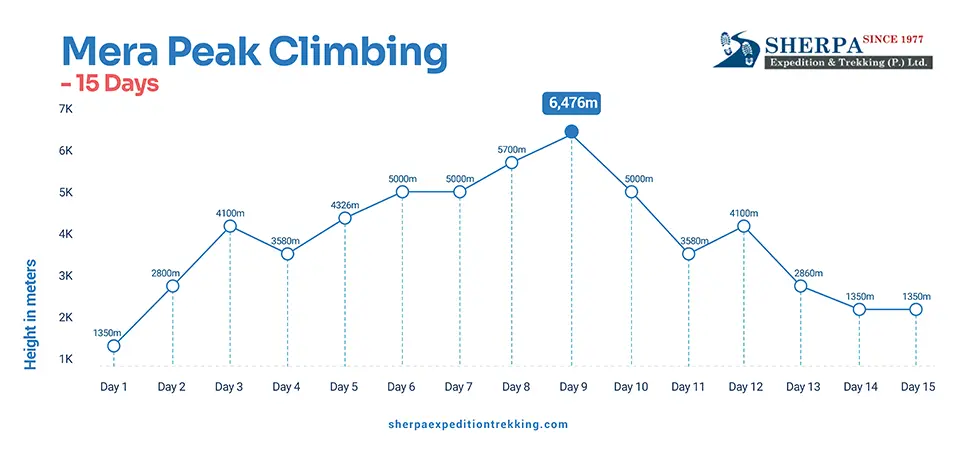
Elevation Profile
15 Days Mera Peak Climbing Itinerary
Once you land at the Tribhuvan International Airport, Kathmandu, you will be met by our representative with a lovely shake of his/her hand who will then drive you to the hotel in a private car. Once you are settled in the hotel, spend your day with a leisure rest as you recover from your flight journey.
Then we will have an introductory session with your trekking guide who will give details about the entire journey including the climbing route, weather condition, safety measure, necessary permit, and most importantly the necessary equipment. So they will check all your gear as well. You might miss out on certain things. So don't hesitate to rent/purchase the required things from the local trekking shop here in the city if needed. Other than that you are free to explore the nearby area or just enjoy a good night's rest in the hotel. It's better that you spend the night in Kathmandu so you will be more prepared for the whole journey ahead to explore beautiful Himalaya mountains through this awesome experience "Mera Peak Climbing".
In the morning, you take a domestic flight from Kathmandu to Lukla (2,840m) – the airport which has maybe the most spectacular runway. Your short trip into the Khumbu Region allows you breath-taking views of the Himalayas before you make landing. The team awaits your arrival at the airport for your onward walk to Chhutang. This initially fairly undemanding path leads across streams along paths through pine trees and rhododendron flowers, taking you to secluded parts of the main Everest route. It is an ideal introductory trek, allowing you to acclimatise nicely before hiking on into the Hinku Valley with your team in your teahouse.
Today's trek takes us through and across the famous and beautiful Zatrwa La Pass (4,610m), traveling from Chhutang and on to Tuli Kharka. Our walk uphill will generally pass through forests and will then come out into wide vistas at the high pass. We can linger here at the pass for impressive and breathtaking views of the snow covered mountains surrounding and valleys beyond, before we descend to our overnight halt which will be at Tuli Kharka in the tranquil Hinku Valley.
Today's walking will require more energy than yesterday's walking due to the elevation and we will walk the itinerary from early afternoon to early evening.
The flora at this elevation also changes and the trees will become fewer as we enter the alpine realm. After checking into our lodgings at Tuli Kharka we can unwind and settle down in the peaceful mountain setting. We will remain in Tuli Kharka overnight to continue the body adjusting to the increased altitude prior to traveling further into the valley.
From here we descend down through the beautiful Hinku Valley towards our next destination Kothe. This trail takes us along various forest paths & mountain streams. We can also observe many kinds of flora including the famous rhododendron, pine trees & others.
As this area is at a slightly lower altitude, compared to yesterday's trek, this will be much more comfortable. Also, since this isn't one of the popular ones like Everest trails, the valley won't be too crowded with trekkers. Plus the surroundings are very peaceful.
As we get closer to Kothe, we will be able to witness some really amazing views of all those hills around and snow covered peaks further away. Kothe is a tiny little settlement near the banks of Hinku River which provides a good rest stop for all those trekkers who want to head towards Mera Peak. We spend the night at a local teahouse here, preparing ourselves for what comes next.
We continue our journey towards Thangnak following the Hinku River all through the upper valley. In today's walk, we gain some altitude as we hike which makes today a crucial part of our acclimatization.
Passing by grazing lands along with rocky hillocks, and finally reaching the alpine plains offering amazing vistas of mountains around us, there are lots more things to see here as we make progress upwards from forested land to more rugged, high-altitude terrains.
This also ensures that while visiting such natural beauties, we can savor them amidst tranquil surroundings rather than getting overpowered by tourist crowds. A few hours later, after walking steadily throughout these trails, we reach Thangnak – one of those smaller seasonal settlements nestled among tall peaks surrounding it, which experiences colder weather due to its elevated location. Here too one will get great scenic views as they sit back and relax in preparation for further ascents on tomorrow's schedule (Khare & Climbing Section).
It's a trekking day to the highest settlement before the final summit climb, Khare at 5,000m. The path traverses the uppermost Hinku Valley with stony paths, glacier streams and vast open fields of alpine. Trek to higher altitudes demands a slow pace due to thinner air.
As you walk, you get a splendid closer view of Mera Peak, glaciers and neighboring snow-clad mountains. The 3-4 hours gradually upward trek will bring you to Khare. Here, climbers do the final packing and review all their climbing gear. Your climbing Sherpa also briefs the next day's program. The remainder of the day, you rest, hydrate and acclimatize for the upcoming summit day. Stay at a comfortable tea lodge.
It’s important to take time to acclimatise to 5,000 m for a safe climb to the summit of Mera Peak. We use today to aid adjustment at this high altitude, before the main trek begins. Instead of complete rest, you will be doing short walks to a location above the glacier and back to Khare to facilitate proper adaptation. In addition to this, your climbing guide will run a class on how to use various pieces of climbing equipment such as; crampons, a safety rope and harness and your ice axe on a small, safer area below the lodge to allow you practice at no risk, and all remaining time in the day is spent maintaining good health, hydration, ensuring all your kit is good for High Camp.
Our Khare Mera trekking continues across the Mera Glacier, and we ascend Mera High Camp through rocky terrain, giving rise to the new mountain surroundings with an astonishing view of the Himalaya panorama. Today’s walking distance and elevation gain are less comparative to previous days, providing ample time for proper relaxation after the tea/soup at our High Camp accommodation.
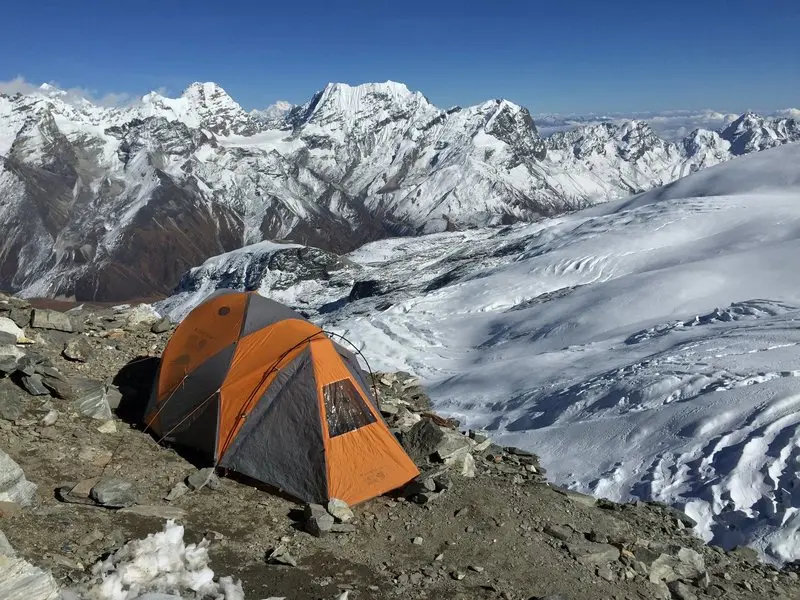
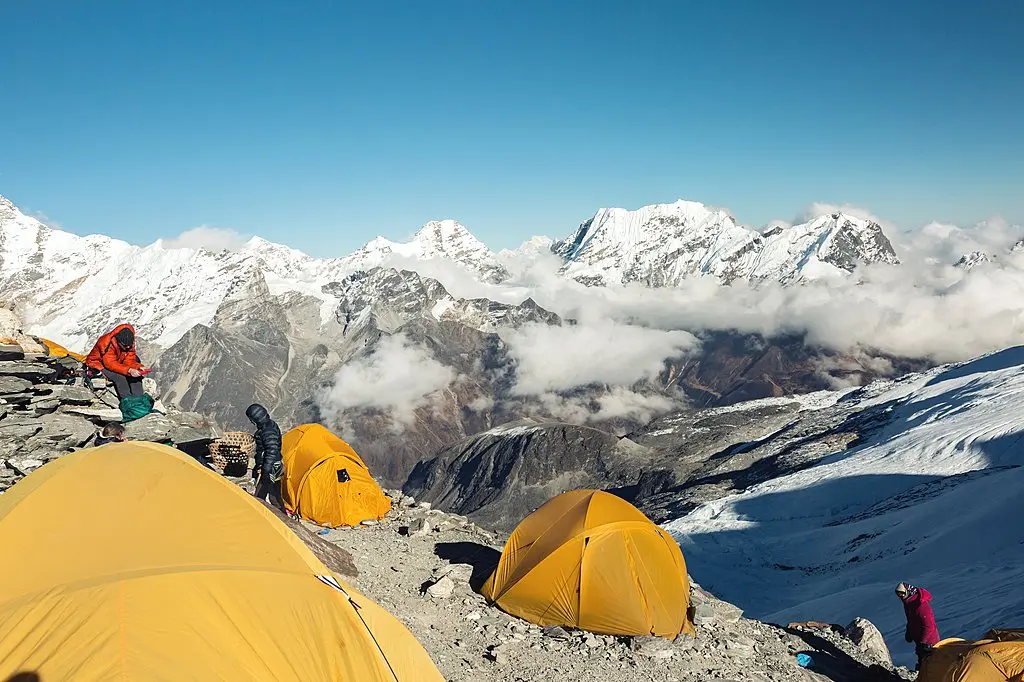
In contrast to our other camping place, Mera High Camp is situated upon an open ridge with a striking and breathtaking 360 degree vista of Mt. Everest, Lhotse, Makalu, Cho Oyu and many other giant peaks of the Himalaya. Upon arrival at High Camp, you will establish yourself at the campsite, have dinner and prepare gear for tomorrow’s expedition to summit the peak, the most awaited part of your journey. Your guide carries out the last briefing session as regards climbing operation, current weather report and the procedures that are to be followed while summiting. Overnight will be early in preparation for the pre-dawn start for the Mera Peak climb.
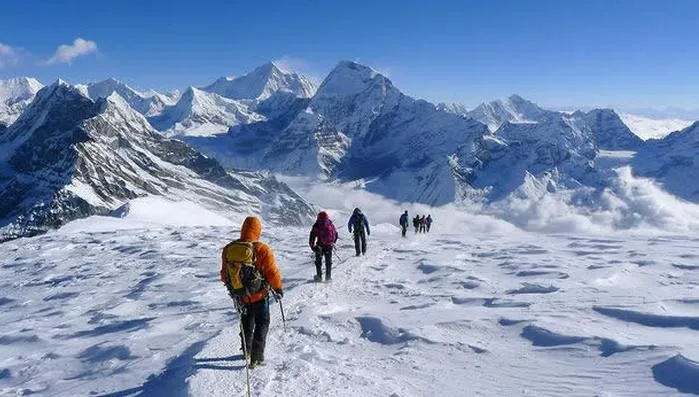
Today is a dream come true as we climb to Mera Peak (6,476 m). Wake up well before the sun for an early start to take the best advantage of the day’s possible weather conditions. Gradually gain altitude and ascend the summit to the best possible view of Nepal; with a clear sky, it’s easy to spot Mount Everest, Lhotse, Makalu, Cho Oyu, Kanchenjunga, etc. We spend some time at the peak for some photographs and to rejoice, and then we will safely descend to the High Camp and again return to Khare. As we return to Khare, it requires patience, as going up is not all; we also need to go down with full safety precautions. Back to Khare, we would have our good time rejoicing with our team as we have successfully conquered the highest trekking peak of Nepal.
A buffer day increases the possibility of reaching Mera Peak Summit. Mountain conditions can alter drastically and unexpectedly in the expedition above 5,500m due to harsh wind velocity or severe snowing; if it is not feasible to attempt the summit, then we will utilize this spare day for adjustments to our itinerary in order to avoid any haste. In case of additional required time for acclimatization, we can avail it. If all activities of the expedition are within scheduled time, with the successful culmination of the summit trip on scheduled dates, one has leisure time for trekking down to Lukla from Mera Peak after being in a serene atmosphere. A buffer day ensures additional time to be on the safe side and increases itinerary flexibility.
Our walk today again involves heading back along the same trail as Khare (5,000m) to Kothe (3,580m). On the way down, this is all the easier as the elevation drop is over 1,400 metres. The trail takes you along the path again via Thangnak, and traverses through glacial stream beds, rocky valleys, and over the high Hinku Valley, arriving back at Kothe.
Downhill the air is thicker and oxygen rich, and your hike is less strenuous, as well as being treated to new landscape as barren alpine and rock is replaced by increasingly green hillsides.
This is the chance to relax and take your mind back over your climb, following the gain of a summit day before heading home. On arrival at Kothe, you'll rest up at a teahouse, ready to continue the trip home the next morning.
The walk departs from Kothe and follows the line of trail gradually up into the Hinku Valley towards Tuli Kharka through a series of quiet wooded valleys and ridgelines. Today the rhododendron, pine and juniper still form most of the banks along our route, with rhododendrons now interspersed in red and yellow blooms. We descend a short way into a greener and wilder valley than we would have experienced on the higher stages of Mera, there is then again a climb to regain altitude to and from which great views of regional valleys and the Himalayan giants are enjoyed.
The walking is consistent but tranquil, the nature of these mountains at this altitude and level being profoundly peaceful.
By late afternoon, we make our entrance into the simple valley of Tuli Kharka, where we set ourselves up for the big push to the last pass of this trip tomorrow.
We will start this day's hike at Tuli Kharka towards our destination Zatrwa La Pass 4,610 meters high. On the trail, we will be introduced with majestic panoramic views of Khumbu and adjacent peaks to the region. Soon, the path descends into dense green forestland, before traversing a picturesque ridgeline trail down to Lukla.
The descent gives us amazing scenery as well as cooler weather than when we were on top. We're done with trekking and climbing after today's walk, so during tonight's dinner we'll toast finishing up our climb to Mera Peak (6,476m) with our guide and other members of our trekkers' crew. Afterwards we are off again for an overnight stay in Lukla because tomorrow we need to fly back down to Kathmandu via flight.
After you finish your morning breakfast and finally catch that stunning 35 to 40-minute flight back to Kathmandu from Lukla, take a final look back at the mountains as the plane heads to the airport at our capital. A representative from Sherpa Expedition and Trekking will meet you with our exclusive vehicle for a transfer to your hotel in the city. Following your transfer, you have the rest of the day to discover the city or perhaps browse the many tourist souvenir shops in Thamel's little, chaotic shopping street. You can also find time to have celebratory drinks with your newfound fellow trekkers in one of the many bars dotted across the city.
After having breakfast, we are going to transfer you to the Tribhuvan International Airport with our own representative of Sherpa Expedition & Trekking as per your flight schedule. And we'll be getting to the airport 3 hrs before departure of your international flight. Now, the trek to Mera Peak expedition trip ends here, carrying with ourselves a number of best memories from Mera Peak, Hinku Valley, the Khumbu region and all other beautiful landscapes. We extend our sincere thanks for selecting Sherpa Expedition & Trekking and wish you a safe trip back home.
Mera Peak Climb Cost and Package
Cost Inclusion
- Airport Transfers: Kathmandu Airport - Your Hotel & the flight terminal - International Airport Kathmandu Airport – Domestic Airport with a private car, jeep to the domestic terminal or to the Ramechhap.
- Double / Twin Bed sharing with breakfast in Kathmandu hotels for two nights (standard hotel)
- Three meals (Breakfast, Lunch & Dinner) throughout your trek
- Fresh Fruit every day after dinner
- Accommodation at a hotel, trekking lodge (teahouse) throughout the trek and tented camps in the climbing session
- Makalu Barun National Park Permits and all required paperwork
- Flight Tickets: Kathmandu to Lukla to Kathmandu (or Ramechhap to Lukla and return to Kathmandu, depending on the flight status of the aircraft and operating airlines).
- 1 highly experienced and good English speaking government authorized trekking guide with his food, accommodation, and salary.
- 1 official climbing permit for Mera Peak issued by NMA
- The provision of strong, helpful and fully equipped Sherpas (porters) with safety and trekking gear (One porter for 2 participants): including their salary, food, accommodation, transportation, and personal insurance.
- Travel Medical and First Aid Kits
- Provisions for emergency air evacuation service (paid by their concerned travel insurance company.)
- SEAT Down jacket, sleeping bag, trekking poles, duffel bag and all necessary equipment; will be provided on the trekking and it must be returned on completion of trip.
- Sherpa Expedition and Trekking T-shirt
- All the government taxes & administrative fees.
- Official trip certificate upon completing the trip.
- Portable Oxygen for AMS monitoring test: Two times daily test at morning & evening with oxygen meter, pulsing and blood oxygen saturation for all team members.
- Assistant guide if your trekking team is 8 or more people.
Cost Exclusion
- Meals for lunch and Dinner, if any, during your stay in Kathmandu.
- Nepal entry visa fee for Nepal cost is $30, $50, $125 for 15 days, 30 days and 90 days.
- Traveler's personal travel and medical insurance.
- Personal international flights from and to your country.
- Extra accommodation and other personal costs.
- Personal beverages including alcoholic and non-alcoholic drinks, soup, tea, coffee, hot chocolate, cocoa, and mineral water, extra food, hot and cold drinks, during trekking days. Such excluded varieties include cake, cookies, pudding, pie, etc.
- Hot showers cost at teahouses and recharge your device (phone, laptop, camera batteries, etc).
- Expenses for all personal purchases, tips and donations.
- Excess baggage weight above 10kg on your flight to Lukla.
Suppose you cut your trekking by one or more days due to health, altitude sickness or any other personal reason. The advance money for your flight tickets, accommodation, rooms and meals will not be reimbursed. Accommodation and meals at the hotels in Kathmandu during your extra stay will have to be covered by the client.
MERA PEAK CLIMBING Departures
Every departure listed below is 100% Guaranteed — once you book, your trip will run as scheduled regardless of group size.
Select a departure month
Fill out the form below and a Travel Expert will reach out to create your perfect tour.
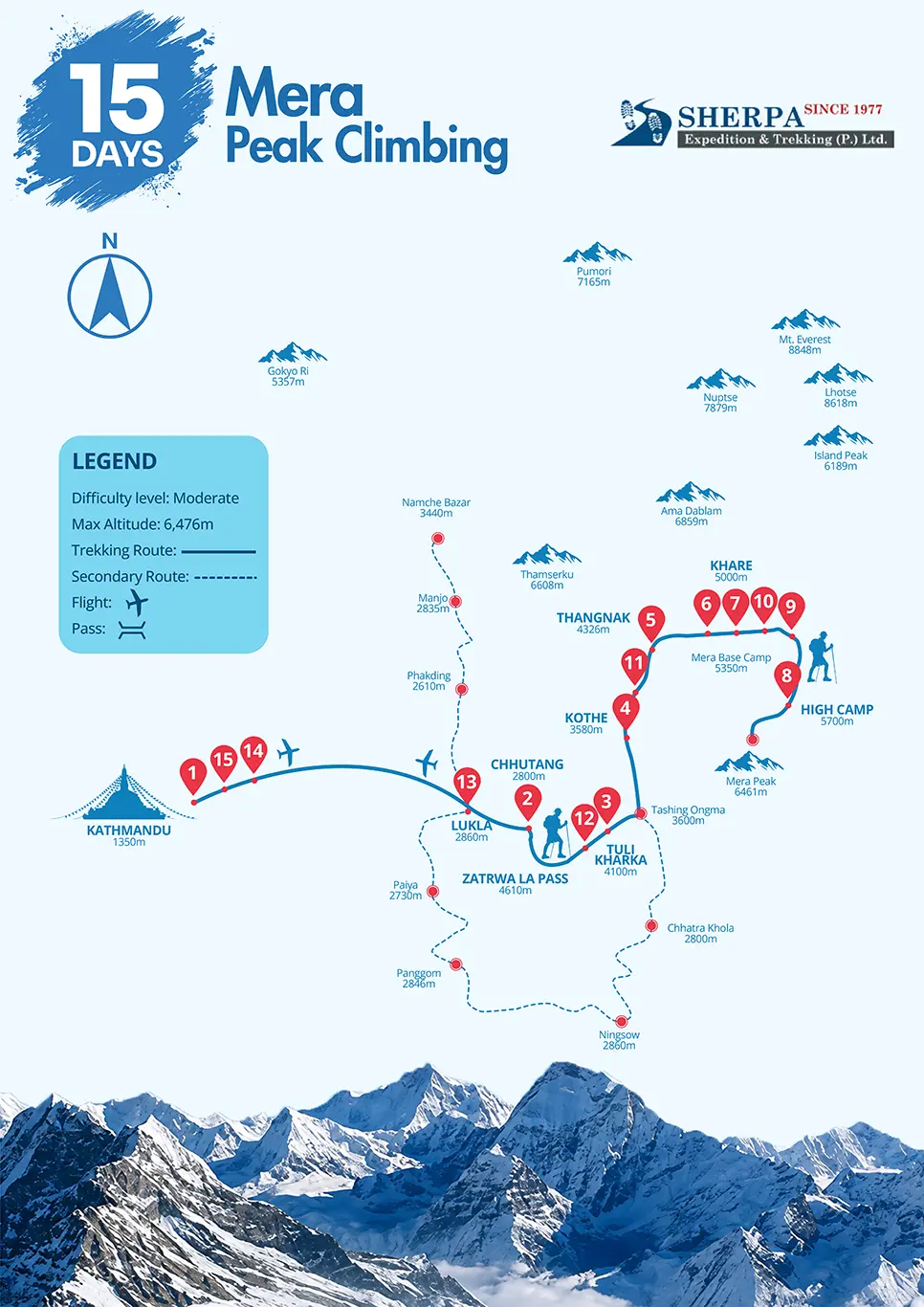
Mera Peak Climb Route map
Packing List and Essential Gear for Mera Peak Climbing
These items comprise all that's needed to have a successful trek, including some other items such as clothing, footwear, sleeping gear, climbing equipment, trekking gear, and personal essentials.
Do keep clothes as light as possible and prefer the ones that dry quickly and are durable given that you need protection at any temperature range, which can be the case in mountains. Always wear three layers for heat retention. Stick to synthetics or wool which retain most of their insulating capabilities even when damp as both of these fibers pull moisture away from the body. Please avoid cotton clothes.
Windproof duffel bags are provided, and you will be supplied with free bottled water during the trek. These duffel bags are hauled up by Sherpas; the duffel bag belongs to you after the trek and is yours to keep. The rest of your luggage that is non-trekking relevant will remain secure and safe in your Sherpa Expedition & Trekking office.
Gear Provided by Sherpa Expedition & Trekking
- We provide all the major group climbing and expedition gear necessary for you to safely and successfully reach the top of the mountains:
- Group Base Camp tent & camping gear
- Dining tent and kitchen gear
- Fixed climbing ropes and dynamic ropes
- Snow bar, snow stakes, ice screws and ice hammer
- Group first aid kit and expedition communication equipment (satellite phone or two-way radio)
- Windproof duffel bag to use throughout the expedition that you will take along (this is provided by the trekking company that you get to take home)
- Free drinking water during the trek.
- Secure locker or place for storing your unnecessary luggage at our Kathmandu office.
Technical Climbing Gear (Personal or Rental)
- Mountain boots (double plastic or liner boots, to take crampons on with)
- 12-point mountaineering crampons
- Ice axe
- Climbing harness and helmet
- Climbing gadget – jumar
- Belay or rappel device (ATC or Figure 8); 2 locking carabiners, 2 non-locking carabiners and 2 climbing slings
- Glacier sunglasses and ski goggles
- Layered climbing system
- Moisture-wicking thermal top & bottom (1 set of each)
- Fleece mid-layer
- Down filling jacket, insulating layer
- Waterproof shell jacket
- Soft shell or trekking jacket
- Waterproof & windproof trousers
- Soft shell trousers
- Warm mountaineering gloves & pair of inner-gloves
- Warm hat/beanie
- Sun hat or baseball caps
- Face mask/Balaclava, scarf, and a "Buff" so you can cover your face against the cold and dust.
Hiking Footwear & Accessories
- Mountaineering boot
- Waterproof walking/trekking shoes
- Double-layered plastic boots for summit days
- Slippers or camp shoes
- 4-5 pairs of wool hiking socks and sock liners, so your feet do not suffer
- Gaiters, windproof or waterproof
- Trekking pole
- Headlamp with spare batteries.
- 30–40 litre day pack with the rain cover, so in case it is raining, it should be useful
- Insulated water bottles/thermoflask
- Water and snow glasses (sunglasses)
- Waterproof backpack cover (if your daypack doesn't have it)
Personal Health & Hygiene, and Travel Essentials
- Personal high-SPF sunscreen cream
- Lip balm/sunscreen
- Personal first aid kit
- Diamox and personal medication
- Blister prevention and medication
- Hand sanitiser
- Wet wipes
- Toothbrush and toothpaste
- Quick-drying towel
- Energy bars/snacks.
- Passport photos, copies of passport and your cash money.
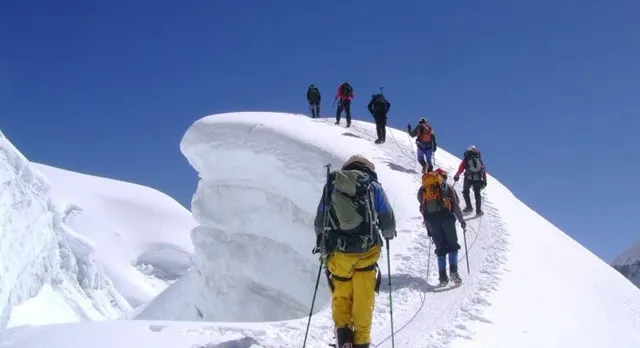
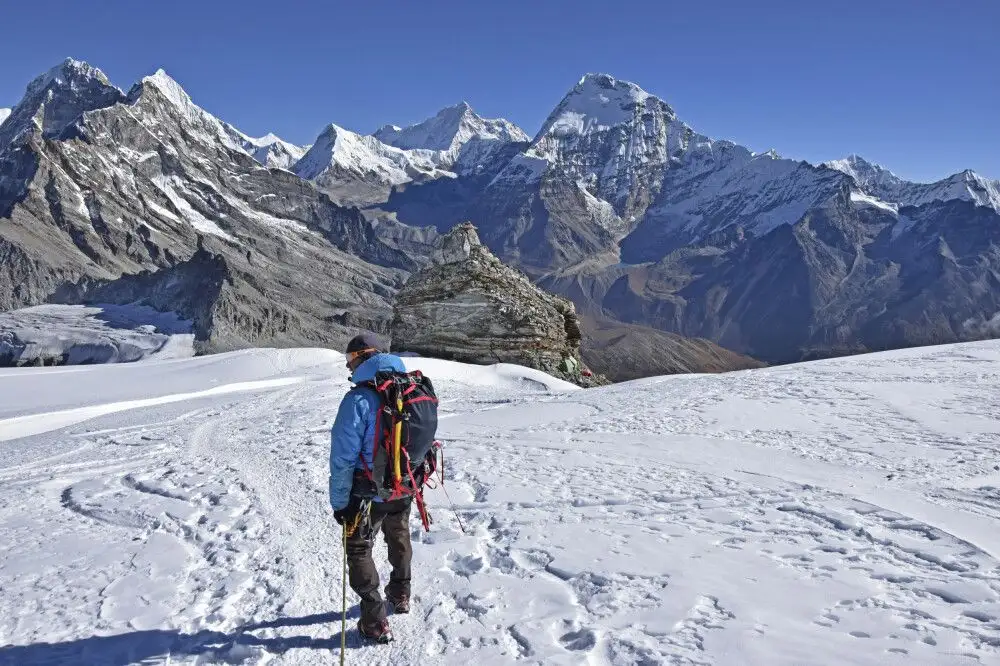
Gallery of MERA PEAK CLIMBING

Best Time for Mera Peak Climbing
Spring Season (March to May)
Trekking and climbing for the spring season from March to May is one of the most thrilling activities for people wishing to climb Mera Peak. Spring weather is very mild in terms of weather and has a lower possibility of unexpected climate changes, due to which you receive quite bright views from all around on your journey towards the peak. This spring, rhododendrons gracefully line each of the paths that you walk. You're given 360-degree dazzling panoramic views over the world’s finest, highest, and most stunning mountains (Everest, Makalu, Lhotse & Cho Oyu).
Autumn Season (September to November)
September to November is ideal for trekkers and adventure climbers who would like to do a ‘trek & climb trip’ on Nepal's highest trekking peak. Immediately following the summer monsoons, the sky is unbelievably clear, and rains are rare in these months. Also, good weather makes the terrain relatively easier to hike & camp in during the Mera Peak trek & climb; you can just spend blissful nights stargazing while camping. In fact, October is an ideal month to go if you're seeking minimal winds & crystal-clear skies, perhaps perfect for you to consider for your Mera climb and trekking venture.
Monsoon (June to August)
For all adventure seekers aspiring to a successful trek & climb to Mera Peak, avoid this month at any cost. The monsoon from June till August sees tremendous amounts of rain. Due to heavy rains, trails can turn mushy, slippery, and terribly difficult to trek on during the Mera Peak trek & climb.
There is heavy cloud cover over mountain ranges & consequently very little visibility during a trek to Mera Peak. Delays of flights to and from Lukla are almost a common feature during monsoons. In fact, weather conditions are extremely severe during these months.
Winter (December to February)
A die-hard adventurer prepared to withstand chilling weather could make the Mera Peak trek and climb during these winter months. While the skies remain startlingly clear, it brings an almost heavy snowfall, brutally biting cold weather & strong winds. One would need prior trekking & mountaineering experience to undertake this trip, in addition to having adequate gear.
Mera Peak Climbing Permits, Rules and Regulations
Mera Peak climbing requires 3 types of necessary permits and adherence to all mountaineering laws and regulations in Nepal. Obtaining climbing permits is possible through an authentic Nepalese Trekking and Climbing Agency. Trekkers should ensure the following as well:
All tourists need to strictly maintain the rules and regulations of national parks.
All tourists should never dump or litter inside the park boundaries.
All tourists should strictly follow the guide appointed for the trekking.
The fee may differ due to different climbing seasons, and the climbing permit in the spring season is more costly than the others.
Mera Peak Climbing Permit
It's required for all climbers. Mera Peak Climbing Permits are issued by the Nepal Mountaineering Association (NMA) by registered climbing agency. The list of permit fees for the Mera Peak Climbing permit is below.
- Mar-May (Spring) – $350 (per person)
- Sep-Nov (Autumn) - $175 (per person)
- Jun-Aug & Dec-Feb (Summer & Winter) – $175 (per person).
This permit is for summit climbing only and cannot be purchased by an individual foreign climber.
Makalu Barun National Park Entry Permit
The normal route of Mera Peak traverses through the National Park.
All visitors (climbers and trekkers) require the entry permit for the above mentioned National Park.
- Foreign National - Nrs 3,000 per person
- SAARC Member - Nrs 1,500 per person
- Nepalese – Nrs 100 per person
The park entry fee helps fund conservation programs that protect local species of flora and fauna, while also supporting trail maintenance within the National Park, as well as general park management practices and programs.
Khumbu Pasang Lhamu Rural Municipality Permit
Required for all trekking in Khumbu.
- All foreign tourists (trekkers) - Nrs 2,000 (per person)
Your expedition package cost covers all required Municipality permits to assist local development initiatives, regional tourism resources, as well as trail improvements and rescue services.
Rules and Regulations
Climbers should have permits throughout the trip, and all are required to follow the regulations/directives of the Nepal Mountaineering Association and the Makalu Barun National Park Authority. Do not leave your waste in the trails and the national park, and cause disturbance in floral and faunal diversity and the life and culture of the local people.
Use the nominated trail only, dispose of rubbish safely according to your guide's instructions, and be careful on unstable ground conditions. Most operators also arrange to charge a refundable garbage deposit as one of the cost factors of this package.
Mera Peak Climbing Difficulty
Mera Peak itself is a ‘non-technical’ Alpine grade PD (‘Peu Difficile’) peak to climb. All that’s involved is a short section of straightforward walking on the snow, with crampons and an ice axe, at around 30-40 degree glaciated inclines. In the circumstances, the issue is neither rock climbing ability nor ice climbing skill, but rather the altitude, the cold and just the hard slogs getting up there.
Mera Peak Climbing Altitude and Acclimatization
To ascend a height of 6,476 m, you will require a gradually decreasing slope. There will be days off to rest at important stages of the journey, such as Thangnak and Khare, which will allow your body to get used to the reduced pressure of thinner air. A greater level of acclimatization equates directly to improved oxygen saturation of arterial blood, which is the largest factor in improving endurance. Endurance is important on the summits you may wish to conquer.
Altitude Sickness
When in the higher altitudes, the atmospheric pressure is low, so Acute Mountain Sickness occurs in human beings. Symptoms can be: headaches, dizziness, fatigue, and loss of hunger for a long time; if the person didn't consult the doctor for AMS, it might lead to HAPE or HACE. Proper descent is needed to stop the cause or when the person starts having all the signs. Proper hydration, limited alcoholic intake and slow climbing are effective.
Is Mera Peak Expedition Suitable for Beginners
Yes, it’s good for beginners as well. So many people say that for those individuals with no climbing experience Mera Peak is one of the best mountain ranges which allows them to successfully trek and then climb to the highest trekking summit in the Nepal Himalayan range. No technical experience of climbing is needed, as fundamental training will take place to learn basic glacier trekking skills at Khare (a small village below base camp).
Mera Peak Climbing Distance and Duration
The total distance covered while going for the Mera Peak trekking is about 100 – 111 km. And if we talk about the time frame then most of them would need at least 14 to 18 days of duration starting from Lukla. The entire route requires approx. 8 to 12 km of trekking with 5 to 7 hours each day by an average trekker. Summit day entails a single lengthy hard 10-12 hour slog starting from midnight from high camp.
Mera Peak Climbing vs Island Peak Climbing
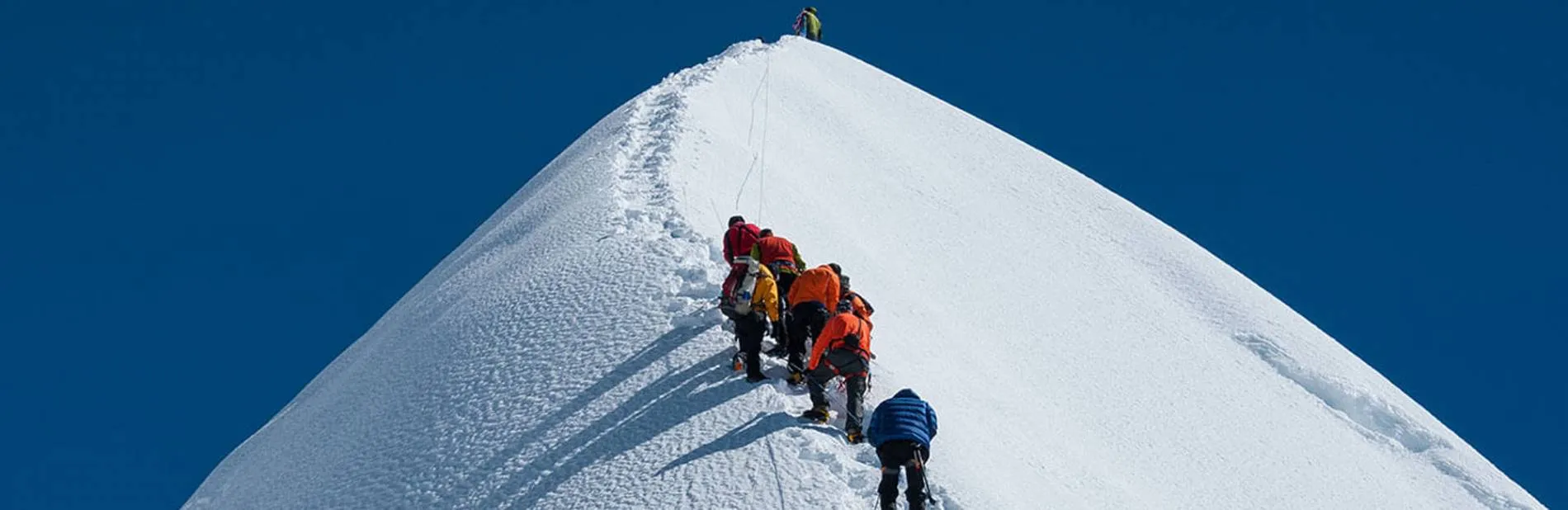
Mera Peak altitude is higher 6,476 meters; whereas Island Peak altitude reaches up to 6,189 meters. Island Peak is comparatively technical as compared to Mera Peak climbing as it involves advanced technical aspects like: climbing the headwall via using the fixed rope, aluminum ladder crossing over crevasses and traversing along steep narrow ridges exposed from everywhere.
Preparation and Safety Measures for Mera Peak Climbing
Physical Fitness
To develop strength and conditioning requires 12–16 weeks of scheduled cardiovascular exercise prior to departure. Train for cardiovascular improvements using running, cycling, rowing, and weighted stair climbing to improve endurance and strengthen your legs. Having cardiovascular endurance training prior will help your body sustain many consecutive 6-hr mountain climbing trips at low altitude on 6-plus hour days.
Mental Preparation
Success at extreme high-altitude trekking demands mental fortitude and the strength to be flexible and resilient. Patience has to rule day-long hikes, sleeping cold in tents in the outdoors, then hibernating at sub-zero temperatures through all the night until we sleep walk the days at this level of fatigue that you have in your body by then; that when you go up, you don't go with anxious, but with expectations and preparing your mind for any meteorological complication or unexpected situation you have there.
Diet and Hydration
Eat a highly fortified, high-carbohydrate diet, which provides the fuel necessary to complete demanding physical activities at higher elevations, because your appetite will decrease once you get at high elevation. Drinking an optimum of 4 to 5 liters daily will combat some of the dehydrating effects (dehydration occurs as much as 4 times more rapidly with heavy respiration, particularly breathing the dry mountain air). Keeping "hydrated" will prevent much of the acute effects of altitude sickness.
First Aid Kit and Medicines
A well-stocked medical kit must contain antibiotics, pain medication, wound dressings, dehydrating salts/rehydration salts, altitude medication (i.e., Diamox - acetazolamide), all personal prescribed medicines, throat lozenges, and a blister kit. The guides will provide oxygen and a pulse oximeter and use their judgment on monitoring health on the glacier.
Essential Documents
All travelers must bring the following travel documents: original of passport (minimum of 6-12 month validity prior to the trip), a Nepal tourist visa obtained at the entry point or prior to arrival, photocopies of a Nepal visa number, proof of purchase of comprehensive travel insurance, and expedition permits.
Useful Information Before Joining the Mera Peak Expedition
Visas
Tourists can purchase the following types of visas upon entry at Tribhuvan International Airport (TIA) in Kathmandu as below:
- 15 days - U.S. $30.
- 30 days - U.S. $50.
- 90 days - U.S. $125.
Your passport must be valid for a minimum of six months from your travel date, and also contain at least one free page.
Insurance
A suitable travel insurance policy covering high-altitude expeditions up to 6,500 m is mandatory. Ensure this plan includes coverage for emergency air evacuation through helicopter, search and rescue, any other expenses for treatment, etc. Also, make sure it covers trip cancellations. Keep soft and hard copies of the policy in close possession. In case of any emergencies, dispatch can be done easily.
Transport
In Kathmandu, you'll be provided with private ground transfer and in-flight transfers to Lukla via domestic airlines. Mountain flying has become too hectic, as many of the flights that are operating out of Lukla Airport from Ramechhap Airport require you to travel 4 to 5 hours by road prior to your flight in the morning.
The helicopter transport option is available during peak trekking season in case of flight cancellation due to technical or weather conditions.
Guide and Porter
The expedition will be led by a professional and licensed climbing guide who will assist with safety concerns, route planning, and technical assistance on the glacier, whereas the main duffel bags (max 20 KGS) will be carried by our Sherpa porters. For every 2 climbers, we provide 1 porter, and he will help you with your altitude trek planning.
Weather Conditions
Generally April – May (spring) and September – October (autumn) are considered the best seasons to ascend Mera Peak as the weather is mostly clear and the temperature is mild. But typically at camp, temperature will be between -10 and -20 at Mera Base Camp and below that at Mera High Camp, and these temperatures coupled with strong winds can lead to a considerable feeling of cold high in the mountains. Avoid this climb during winter as you'll find very low temperatures, heavy snowfalls, and possibly visibility issues across pass points.
Accommodation
All trekking will be spent in twin-sharing non-heated "teahouses" (guest lodges) throughout our itinerary, including simple rooms with beds and blankets and a shared basic bathroom for breakfast/lunch/dinner. Since there are no teahouses available at the Mera Base Camp and Mera High Camp, we utilize specially selected four-season, high-end, expedition-quality mountain tents (2 people per tent).
Food and Water
Meals served in our teahouses range from standard Tibetan and Nepalese fare such as noodles, rice, lentils, vegetable curry, and soups to a selection of other dishes such as potatoes, porridge, etc. Always drink boiled, filtered, or chemically treated water only; avoid drinking anything coming directly from the tap, as the chances of getting waterborne diseases are high.
Personal Expenses
While the package includes food, accommodation, and permits, we do recommend keeping some additional funds in Nepalese Rupees to supplement in the following ways: tips for your guide & porter, hot drinks, hot showers at teahouses, WiFi access at teahouses, bottled drinks, snacks, and personal shopping at various places.
RELATED PACKAGES


FAQS Related to MERA PEAK CLIMBING
General Information
Mera Peak is in Solukhumbu District, in east Nepal in Hinku Valley. It falls within Makalu Barun National Park in the southeast section of the Everest range.
It's the highest officially recognized trek peak in Nepal at 6,476 m, offering a high mountain summit ascent with the best summit views in Nepal of five mountains over 8,000 meters.
It is favored in Nepal for high altitude ascents, Mera Peak offers the most direct ascent to a 6,000-meter high peak for aspiring mountaineers looking for a beginner mountaineering, with a high level of success, views that are spectacular, and a manageable glacier required.
No, you cannot ascend Mera Peak alone. According to the laws and regulations, it's compulsory to arrange your trek and permits via a licensed trekking agency of Nepal and to accompany the summit by a mountain guide registered with a mountain agency.
Preparation and Fitness
A very strong cardiovascular fitness and endurance level is crucial. It requires trekking in the Himalayas for 6-8 hours per day at very high altitudes on rocky, uneven ground with only a day pack to carry on the ascent.
No prior technical mountaineering experience is necessary on Mera Peak. We use only non-technical snow to ascend this peak. Basic crampon, harnessing, and ice axe training are given at Khare by our team.
Yes, one day of pre-climb training is a part of the typical Mera trek itinerary. Training on glacier travel techniques, including ascending via fixed ropes and wearing crampons, takes place in Khare.
Yes, it is better to use an 8 to 12 kg weighted pack while on hikes and stairclimbs before leaving on this journey. This helps establish the core strength for carrying on this Mera Peak trek.
Health and Safety
Yes, as expected due to altitude, Mera Peak does carry significant health risks for travelers. As the elevation reaches 6,476 meters high on Mera Peak, you must maintain constant practice for acclimatization and a slow pace due to the thin atmospheric oxygen supply.
Serious headache, nausea/vomiting, severe shortness of breath at rest, and loss of motor functions of balance are symptoms of dangerous altitude sickness. Extreme exhaustion and confusion along with blue or pale lips indicate threatening effects of altitude sickness
A serious case of altitude sickness is deadly in 6-12 hours without notice with treatment, in which condition, edema of the lungs or brain might come and descend to a lower altitude urgently in time and may be the only treatment to avoid long-term ill effects.
There are no authorized medical points anywhere up the distant trail to Mera Peak through Hinku Valley. Nonetheless, your team guides come up with a first-aid kit and a pulse oximeter for you, with which he takes care of vital stats every day at tea house.
Permits
Required Permits for Mera Peak Climb: There are three permits that are mandatory for Mera Peak climbing expeditions. They are:
NMA Mera Peak Climbing Permit, Makalu Barun National Park Entry Permit, Khumbu Pasang Lhamu Rural Municipality.
Permit fees for NMA Mera Peak in Spring are USD 350 per person. The months of March, April, and May are spring months and are the ideal time to climb. The weather will be extremely good, and visibility will clear due to more time on the mountain.
The documentation required for the Mera Peak permit application as specified by your tour agency: Passport-size photograph - six copies (usually passport size with a blue or white background); copy of passport with remaining validity for 6 months; digital photographs - passport and photo I.D., visa, and a copy of passport's main page; planned expedition dates; contact number of emergency contacts; information about any relevant previous trekking expeditions.
No. Solo climbers are not allowed to apply for the Mera Peak permit themselves through the online portal. The permit is only accessible for authorized trekking agencies registered under the Nepal government who deal directly with the Nepal Mountaineering Association for permits.
Insurance and Visa
Absolutely, this Mera Peak trek definitely requires comprehensive travel insurance cover. This should cover you for high-altitude treks up to your expedition’s altitude with high-altitude trekking for emergency medical treatment and specifically include the cost of helicopter rescue up to an altitude of 6,500 meters.
Your insurance policy should cover up to an altitude of 6,500 m – standard travel insurance often ceases at 4,000 meters. Please ask for a good policy for treks and climbs in high altitudes or for mountaineering.
Nepal does have an on-arrival visa, which you could arrange at the Tribhuvan International Airport, Kathmandu. Travel visas can be arranged for a variety of periods: 15 days, 30 days, & 90 days on approval.
Having the visa ready would also be handy for exchanging any major currency into cash that you wouldn’t mind sharing with border officers, including the USD, the EUR, or the GBP. Electronic payment facilities are available in places but are very unreliable, so you must come equipped.
Guides and Support
Absolutely, it is written in Nepalese mountaineering rules that you have to take a guide with you. There is a ban on climbing alone, and a licensed guide helps you with the trail, packing, and altitude.
Our Mera Peak guides are highly skilled and government-licensed and have prior working experience that is quite good for doing high altitudes. Some Mera Peak Sherpa guides have guided on Mera Peak more than two to three dozen times and have experience being Wilderness First Aid and Rescue instructors as well.
They assess conditions based upon signs and offer additional oxygen and immediate assistance when an emergency situation requires that. If the symptoms of altitude sickness were really problematic, then they would arrange quick manual ascents or advise helicopter evacuation, which you would be insured for.
Yes, rest assured, your guide will be teaching you how to use climbing gears properly. At your training day in Khare, you will learn how to fit crampons, tie into a harness, hold ice axes, and climb fixed ropes.
Accommodation
Accommodation is in traditional tea house lodges up until the lower trek to Khare. Then it will be high-altitude four-season mountain tents for camps in Mera Base Camp and High Camp.
Rooms are standard, shared mostly in the tea house trek, with 2 simple single beds and basic furniture. In high-altitude camping above Khare, you will share 2-man sturdy expedition tents sponsored by the agency with fellow climbers.
Yes, you can have your device charged at tea house lodges below, but it will be on extra charge. Solar charging stations will work up to Khare; however, efficiency comes down to very low in extreme high-altitude temperatures.
Yes, you will find Wi-Fi at tea houses below on a local SIM network card of "Everest Link." The signal comes down from Kothe to a higher altitude, and there is no Wi-Fi at High Camp and Base Camp.
Latest Traveller’s Reviews
Travel experiences of our clients who recently returned from their trips.
100% of travellers recommend this trip
Based On 124 Reviews
Excellent Team
Amazing Experiences
Mera Peak Summit

Write Your Review
Average Customer Ratings
How The Travellers Have Rated This Package
119
5
0
0
0